163 lines
7.5 KiB
Markdown
163 lines
7.5 KiB
Markdown

|
---
|
|||
|
|
license: apache-2.0
|
|||
|
|
base_model: Qwen/Qwen3-0.6B
|
|||
|
|
language:
|
|||
|
|
- en
|
|||
|
|
pipeline_tag: text-generation
|
|||
|
|
tags:
|
|||
|
|
- pii-detection
|
|||
|
|
- named-entity-recognition
|
|||
|
|
- token-classification
|
|||
|
|
- constrained-decoding
|
|||
|
|
- privacy
|
|||
|
|
---
|
|||
|
|
|
|||
|
|
# qwen3-0.6b-pii-sft-v2 · SPANIEL
|
|||
|
|
|
|||
|
|
*Part of the [SPANIEL project](https://github.com/harshsinghal/SPANIEL) — SPAN Identification from Everyday Language.*
|
|||
|
|
|
|||
|
|
**[GitHub repo](https://github.com/harshsinghal/SPANIEL)** (code, constrained decoder, eval harness) ·
|
|||
|
|
**[Run the demo app](https://github.com/harshsinghal/SPANIEL#try-it-the-demo-app)** (one Docker command, local-only) ·
|
|||
|
|
**[Blog series](https://github.com/harshsinghal/SPANIEL#the-journey-as-blog-entries)** (the full training journey)
|
|||
|
|
|
|||
|
|
A 0.6B-parameter PII extraction model that accepts **free-form entity type
|
|||
|
|
names**. Given a document and a list of types to find — including types never
|
|||
|
|
seen in training — it reproduces the document byte-identically with matching
|
|||
|
|
spans wrapped in XML tags.
|
|||
|
|
|
|||
|
|
```
|
|||
|
|
Entity types:
|
|||
|
|
- person name
|
|||
|
|
- patient mrn
|
|||
|
|
|
|||
|
|
Text:
|
|||
|
|
Patient Brian Weaver (MRN BX-40912) called yesterday.
|
|||
|
|
```
|
|||
|
|
```
|
|||
|
|
Patient <person name>Brian Weaver</person name> (MRN <patient mrn>BX-40912</patient mrn>) called yesterday.
|
|||
|
|
```
|
|||
|
|
|
|||
|
|
Designed to be served with a **copy-or-tag constrained decoder** (grammar
|
|||
|
|
masking at the logits level) that makes copy drift and malformed tags
|
|||
|
|
structurally impossible; the model also behaves well unconstrained
|
|||
|
|
(~96% copy-faithful).
|
|||
|
|
|
|||
|
|
## Try it in two minutes
|
|||
|
|
|
|||
|
|
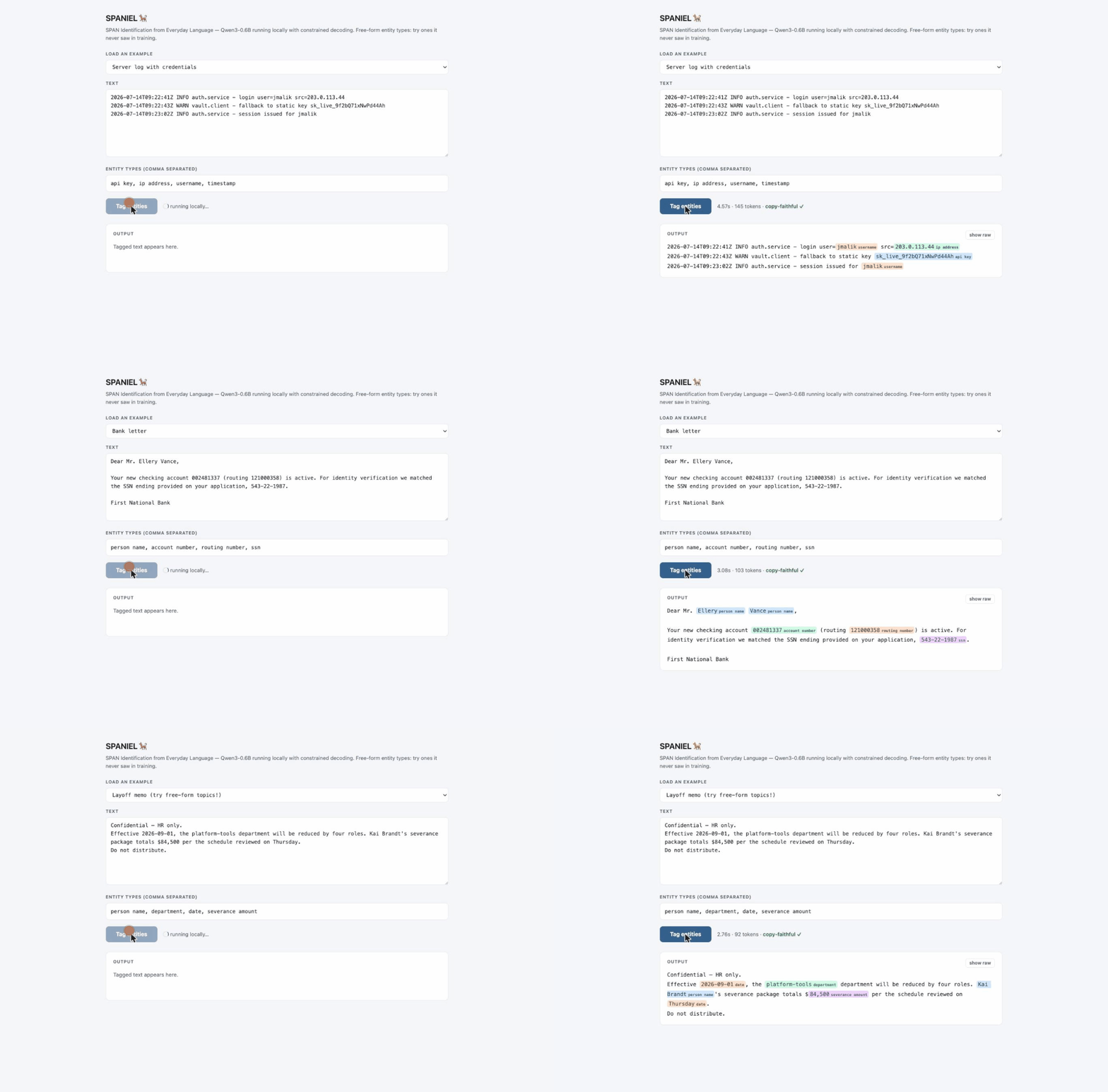
A local web app with 15 preloaded examples (medical forms, server logs,
|
|||
|
|
transcripts, invoices) and editable free-form entity types — no data leaves
|
|||
|
|
your machine:
|
|||
|
|
|
|||
|
|
```bash
|
|||
|
|
docker run -p 8377:8377 -v spaniel-models:/models ghcr.io/harshsinghal/spaniel
|
|||
|
|
# open http://localhost:8377
|
|||
|
|
```
|
|||
|
|
|
|||
|
|
|
|||
|
|
|
|||
|
|
The weights are pulled from this repo on first start and cached. On Linux
|
|||
|
|
with an NVIDIA GPU add `--gpus all`; on Mac/Windows it runs on CPU. Full
|
|||
|
|
details in the [SPANIEL repository](https://github.com/harshsinghal/SPANIEL).
|
|||
|
|
|
|||
|
|
## Results
|
|||
|
|
|
|||
|
|
Strict span-level exact-match F1 on a 300-document held-out eval
|
|||
|
|
(nvidia/Nemotron-PII test split), constrained decoding:
|
|||
|
|
|
|||
|
|
| Evaluation axis | F1 |
|
|||
|
|
|---|---|
|
|||
|
|
| Original gold labels | 0.930 |
|
|||
|
|
| Adjudicated gold (annotation noise corrected, human-spot-checked) | 0.918 |
|
|||
|
|
| **Requests using entity-type names unseen in training** | **0.864** |
|
|||
|
|
|
|||
|
|
Reference points: gpt-oss-120b zero-shot with the same prompt scores 0.580
|
|||
|
|
(45% copy-drift rate); the v1 model trained on 2–4 aliases per label scored
|
|||
|
|
0.747 on unseen names — the wide-alias training in v2 recovered 11.7 points.
|
|||
|
|
|
|||
|
|
## Training
|
|||
|
|
|
|||
|
|
- **Base**: Qwen/Qwen3-0.6B, full-parameter SFT (no LoRA), bf16.
|
|||
|
|
- **Recipe**: TRL `SFTTrainer`, prompt-completion format with loss on the
|
|||
|
|
tagged completion only; sequence length 3072; effective batch 32
|
|||
|
|
(16 × grad-accum 2); lr 1e-5 cosine, 1 epoch = 12,142 steps.
|
|||
|
|
- **GPU time (this model)**: ~11 hours on a single H100 NVL, plus ~2 hours of
|
|||
|
|
evaluation generation. Checkpoints were pushed to this repo every 500 steps
|
|||
|
|
(`hub_strategy="every_save"`), so the full training trajectory is preserved
|
|||
|
|
in the commit history.
|
|||
|
|
- **Lineage GPU time**: v1-50k ablation ~3.7h (A100 40GB), v1-full ~8h
|
|||
|
|
(H100 NVL), 0.6B/1.7B size ablations ~3h (A100). Entire project including
|
|||
|
|
all failures: roughly $85 of rented spot GPU time.
|
|||
|
|
|
|||
|
|
## Datasets and how they were combined
|
|||
|
|
|
|||
|
|
389,521 training examples from four sources:
|
|||
|
|
|
|||
|
|
| Source | Share | Notes |
|
|||
|
|
|---|---|---|
|
|||
|
|
| [gravitee-io/pii-detection-dataset](https://huggingface.co/datasets/gravitee-io/pii-detection-dataset) | 44.6% | 22 coarse labels; format diversity (HTML/JSON/logs); 3 junk labels dropped |
|
|||
|
|
| [nvidia/Nemotron-PII](https://huggingface.co/datasets/nvidia/Nemotron-PII) | 25.7% | 55 fine labels; `date_time` spans lacking a clock time deterministically relabeled to `date` |
|
|||
|
|
| [ai4privacy/pii-masking-openpii-1.5m](https://huggingface.co/datasets/ai4privacy/pii-masking-openpii-1.5m) | 28.2% | English slice only (163k rows, 110k sampled); 20 high-frequency labels; 1-char spans dropped |
|
|||
|
|
| Synthetic register documents | 1.5% | 1,966 batch-generated JSON-log / checkbox-form / prose docs (upsampled ×3), filling register gaps found by error analysis |
|
|||
|
|
|
|||
|
|
Combination principles (full details and seeded, reproducible builders in the [SPANIEL repository](https://github.com/harshsinghal/SPANIEL)):
|
|||
|
|
|
|||
|
|
- **Label schemas are not unified.** Each example's request carries its own
|
|||
|
|
source's vocabulary; the label set is an input, so cross-source synonyms
|
|||
|
|
(`US_SSN` vs `ssn` vs `SOCIALNUM`) are conditioning signal, not conflicts.
|
|||
|
|
- **Label names are sampled from ~22 natural-language aliases per label**
|
|||
|
|
("date of birth" / "dob" / "birthdate" / "day someone was born"...), which
|
|||
|
|
is the mechanism behind unseen-name generalization.
|
|||
|
|
- **Request construction**: 40% full source vocabulary, 40% present labels
|
|||
|
|
plus 2–6 negatives (biased toward containment families — city/state/country,
|
|||
|
|
first/last name — where abstention is hardest), 20% strict subsets.
|
|||
|
|
- **Guideline conditioning**: 30% of examples carry short per-label rules in
|
|||
|
|
the request, with targets relabeled to obey them.
|
|||
|
|
- **Every target is byte-exact**: stripping tags reproduces the input
|
|||
|
|
exactly (validated at build time; 0 violations in 5,000 sampled).
|
|||
|
|
|
|||
|
|
## Usage
|
|||
|
|
|
|||
|
|
```python
|
|||
|
|
from transformers import AutoModelForCausalLM, AutoTokenizer
|
|||
|
|
|
|||
|
|
tok = AutoTokenizer.from_pretrained("Harsh/qwen3-0.6b-pii-sft-v2")
|
|||
|
|
model = AutoModelForCausalLM.from_pretrained("Harsh/qwen3-0.6b-pii-sft-v2",
|
|||
|
|
dtype="bfloat16", device_map="auto")
|
|||
|
|
|
|||
|
|
SYSTEM = ("You tag entities in text. Reproduce the user's text exactly, wrapping each "
|
|||
|
|
"entity that matches a requested type in XML tags, like <label>entity</label>. "
|
|||
|
|
"Use only the requested labels. Tag every match. If nothing matches, reproduce "
|
|||
|
|
"the text unchanged. Never alter, add, or omit any other characters.")
|
|||
|
|
|
|||
|
|
types = ["person name", "email", "employee badge id"] # free-form
|
|||
|
|
text = "Reach Anita (badge A-7731) at anita.k@corp.io."
|
|||
|
|
user = "Entity types:\n" + "\n".join(f"- {t}" for t in types) + "\n\nText:\n" + text
|
|||
|
|
|
|||
|
|
prompt = tok.apply_chat_template(
|
|||
|
|
[{"role": "system", "content": SYSTEM}, {"role": "user", "content": user}],
|
|||
|
|
tokenize=False, add_generation_prompt=True, enable_thinking=False) # important
|
|||
|
|
out = model.generate(**tok(prompt, return_tensors="pt").to(model.device),
|
|||
|
|
max_new_tokens=1024, do_sample=False)
|
|||
|
|
print(tok.decode(out[0], skip_special_tokens=True))
|
|||
|
|
```
|
|||
|
|
|
|||
|
|
Pass `enable_thinking=False` — the model was trained without thinking blocks.
|
|||
|
|
For production use, pair with the constrained decoder from the [SPANIEL
|
|||
|
|
repository](https://github.com/harshsinghal/SPANIEL) (`pii_decode.py`): it guarantees output validity and is slightly
|
|||
|
|
faster than unconstrained generation.
|
|||
|
|
|
|||
|
|
## Limitations
|
|||
|
|
|
|||
|
|
- **English only.** Multilingual source data was deliberately filtered out.
|
|||
|
|
- **Attribute semantics**: entities are spans disclosing information about a
|
|||
|
|
person or their record. World-fact mentions (a country named in encyclopedic
|
|||
|
|
prose) are intentionally *not* tagged. This is a documented annotation
|
|||
|
|
stance, not a bug.
|
|||
|
|
- Unseen type names work well when semantically near the training
|
|||
|
|
distribution; paraphrases far outside any alias set's reach can fail
|
|||
|
|
entirely (measured floor exists — see the evaluation writeups).
|
|||
|
|
- Softer semantic types (occupation, times) remain the weakest labels.
|
|||
|
|
- Trained and evaluated on synthetic PII corpora; validate on your own
|
|||
|
|
distribution before production use. Review the source datasets' licenses
|
|||
|
|
before commercial redistribution.
|